Cash Flow vs. Appreciation: Which Strategy Makes Sense When Investing in Florida Real Estate?
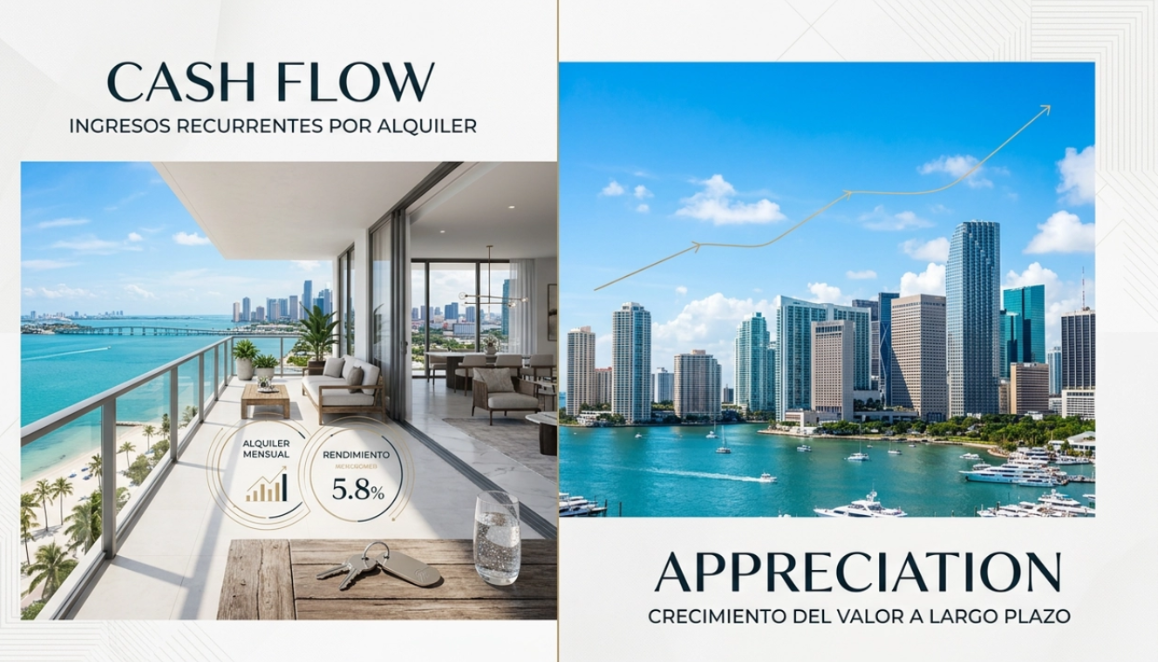 When you decide to invest in Florida real estate, finding a property at a good price is only part of the equation. One of the first decisions you need to make is what you expect from your investment: monthly income from the beginning or long-term property value growth?
This is where two fundamental concepts come into play: cash flow and real estate appreciation.
You do not necessarily have to choose only one. Some investment opportunities may provide a balance between both, but understanding how each strategy works can help you evaluate properties according to your financial goals.
What Is Cash Flow in Real Estate?
Cash flow is the money remaining from rental income after paying the expenses associated with owning and operating the property.
For example, if a property generates $2,500 per month in rent, that does not mean you are making a $2,500 monthly profit.
You need to consider expenses such as the mortgage, property taxes, insurance, HOA fees, maintenance, property management, repairs and potential vacancies.
So, when someone says a property “rents very well,” the more important question is:
How much money is actually left after all expenses are paid?
That number provides a much more realistic picture of the property's monthly investment performance.
 What Does Investing for Appreciation Mean?
Real estate appreciation occurs when a property's value increases over time.
An investor may purchase in an area where current cash flow is modest but where factors such as population growth, job creation, infrastructure, new communities, businesses and economic development could support future housing demand.
With this strategy, a significant portion of the potential return may come later, particularly when the investor sells or refinances the property.
However, there is an important distinction: future appreciation is never guaranteed. Property values can increase, remain stable or decline depending on market and economic conditions.
For this reason, appreciation strategies should be based on market data, comparable sales and economic fundamentals, rather than simply assuming that “Florida real estate always goes up.”
Why Can Florida Work for Both Strategies?
Florida continues to attract real estate investors because of factors including population growth, migration, economic activity and the diversity of its housing markets.
But Florida is not one single real estate market. Miami, Orlando, Tampa, Jacksonville, Fort Myers and Cape Coral, for example, can have very different purchase prices, rents, inventory levels and operating costs.
Instead of simply asking, “Should I invest in Florida?” a better question is:
Which Florida market has the numbers that best support my investment strategy?
When Should Investors Prioritize Cash Flow?
A cash-flow strategy may be particularly relevant for investors seeking recurring income while holding a property for several years.
The relationship between purchase price and potential rental income becomes especially important.
A lower-priced property in an area with consistent rental demand could potentially generate stronger monthly numbers than a considerably more expensive property in a premium location.
Florida investors should also carefully evaluate insurance, property taxes, HOA fees, maintenance and flood exposure, as these expenses can significantly affect profitability.
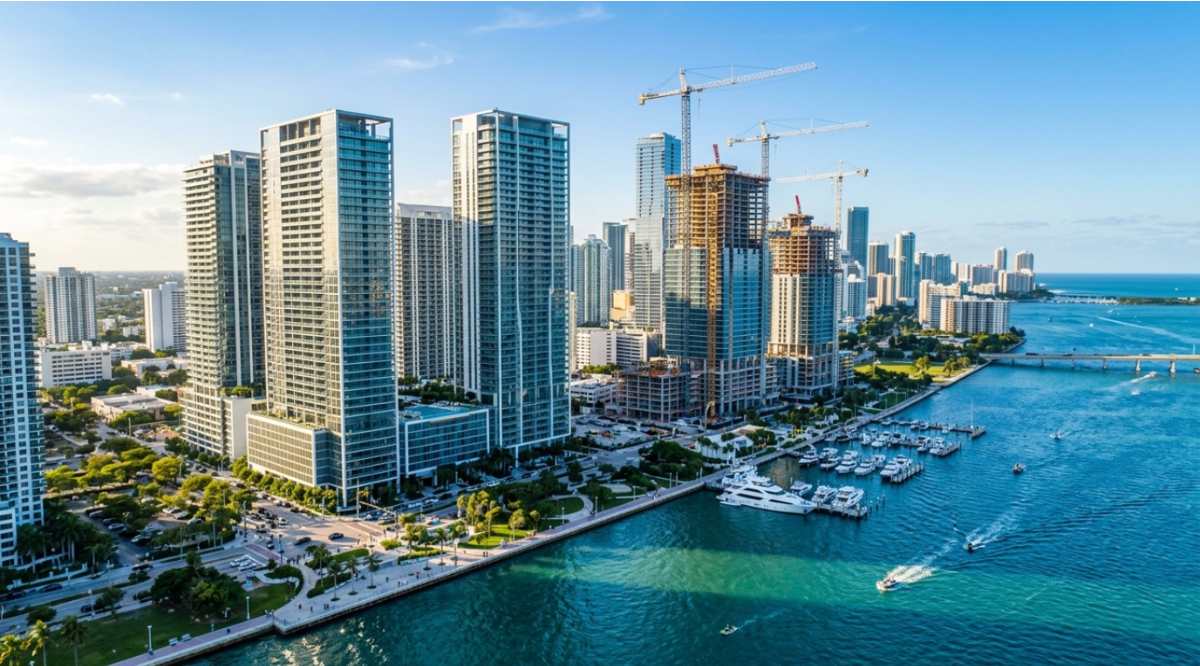 When Should Investors Focus on Appreciation?
Some investors may accept lower current cash flow in exchange for owning property in an area with fundamentals that could support long-term value growth.
Factors to evaluate include new developments, infrastructure improvements, employment growth, migration trends, housing inventory and availability of land for future development.
This strategy requires patience and the financial capacity to hold the property through different market cycles.
Can You Combine Cash Flow and Appreciation?
Yes. For many investors, finding a balance between the two may be the goal.
A property could provide reasonable cash flow today while also being located in a market with fundamentals that may support long-term appreciation.
The property generating the highest rent is not automatically the best investment, just as buying in the most expensive neighborhood does not guarantee the highest return.
What Should You Analyze Before Investing?
Before purchasing an investment property in Florida, estimate rental income using real comparable properties and calculate all expected expenses. Then evaluate sales trends, inventory, rental demand, local development and comparable properties.
Your investment horizon also matters. If recurring income is the priority, cash flow may carry more weight. If your objective is building wealth over several years, appreciation potential may play a larger role.
The right strategy is the one that matches your objectives and whose numbers work under realistic assumptions.
Florida can offer opportunities for different types of investors, but every property should be analyzed as a business.
If you are considering investing in Miami or Florida real estate, I can help you compare markets, analyze properties and evaluate the numbers before making your decision.
Ingrid Centeno | Real Estate Broker Associate
Miami & South Florida Real Estate
Categories
Recent Posts






GET MORE INFORMATION