Pre-Approval vs. Pre-Qualification: Which Do You Need Before Buying a Home in Florida?
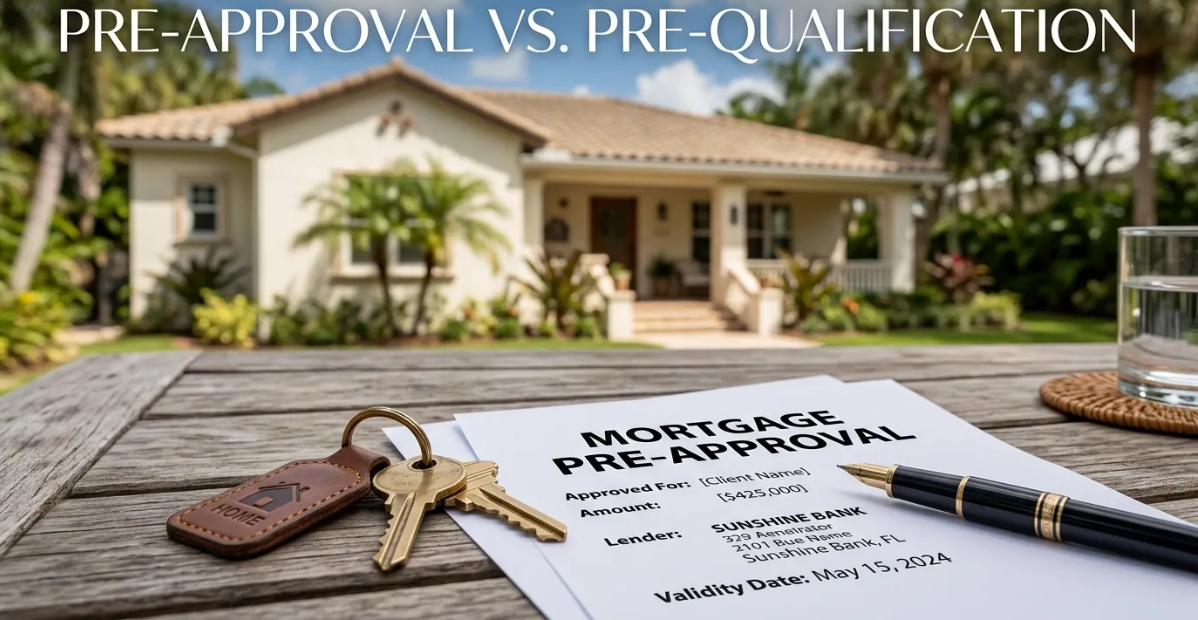 Buying a home starts before you begin touring properties. One of the first steps when buying a home in Florida is understanding how much you may be able to finance and how prepared you are to make an offer.
This is where mortgage pre-qualification and mortgage pre-approval come in. Although these terms are sometimes used interchangeably, they may represent different processes depending on the lender.
Understanding the difference can help you start your Florida home search with clearer expectations and a better strategy.
What Is Mortgage Pre-Qualification?
A mortgage pre-qualification is generally an initial assessment that estimates how much you may be able to borrow.
Depending on the lender, it may be based primarily on financial information you provide, such as income, debts, and assets.
If you are in the early stages of buying a property in Florida, a pre-qualification can help you establish an approximate price range and understand what type of home may fit your financial situation.
However, pre-qualification is a preliminary assessment, not a final loan approval.
What Is Mortgage Pre-Approval?
A mortgage pre-approval typically involves a more detailed evaluation of your finances.
The lender may review your income, assets, debts, employment history, and credit to determine how much it may be willing to lend under certain conditions.
If you meet the lender's criteria, you may receive a pre-approval letter stating the amount the lender may be willing to finance.
Keep in mind that a pre-approval does not guarantee final loan approval. Final financing can still depend on factors such as underwriting, the property you select, its appraisal, and whether your financial situation continues to meet the loan requirements.
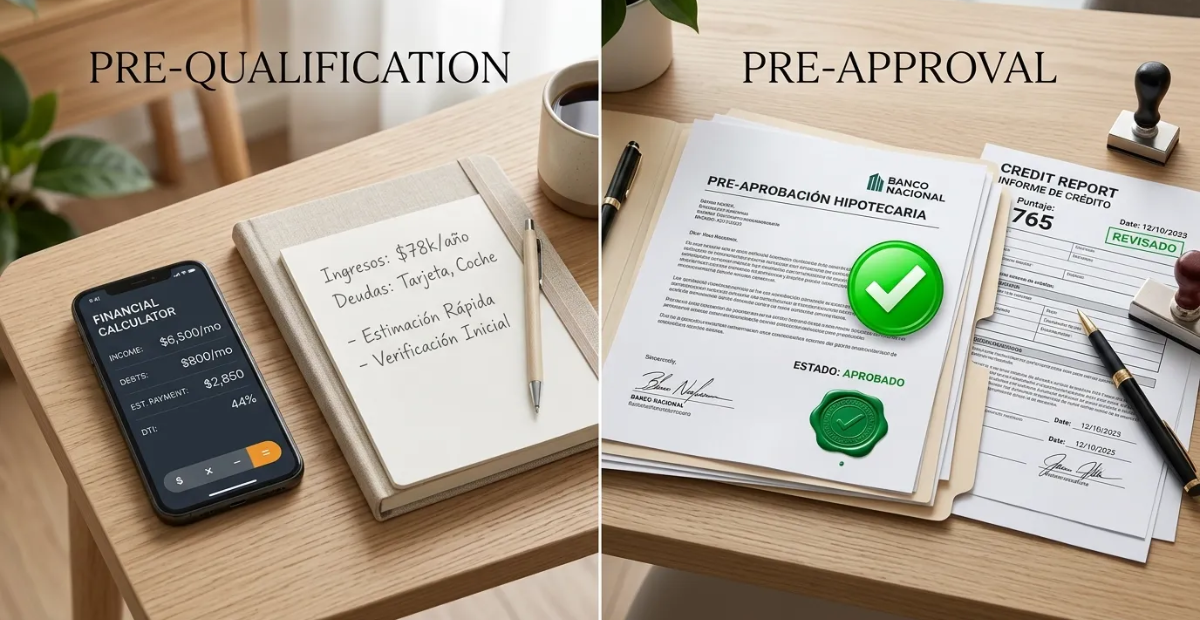 Pre-Qualification vs. Pre-Approval: What’s the Difference?
The main difference is usually the level of financial review performed by the lender.
Pre-qualification can provide an initial estimate of your home-buying power, while pre-approval may involve a more comprehensive review of your financial situation.
However, lenders do not always use these terms in the same way. One lender may call a process “pre-qualification” while another may call a similar process “pre-approval.”
For that reason, ask what financial information was reviewed or verified before the letter was issued.
Why Can a Pre-Approval Help When Making an Offer?
When you submit an offer, the seller is not only considering the purchase price. They may also want to know whether you are financially prepared to complete the transaction.
A pre-approval letter can show that a lender has already evaluated certain aspects of your financial situation.
This may help you present yourself as a better-prepared buyer, especially when multiple buyers are interested in the same property.
Pre-approval can also help you focus your search on homes within a realistic price range, saving time and helping you make more informed decisions.
What Documents May You Need?
Requirements vary by lender and loan type, but during the mortgage pre-approval process, you may be asked for:
- Proof of income
- Bank or investment statements
- Information about existing debts
- Tax returns or employment information
- Authorization to review your credit
Having these documents organized in advance may help make the process more efficient.
Pre-Approved Doesn’t Mean You Should Spend the Maximum
If a lender determines that you may qualify to finance a certain amount, that does not mean you need to spend that much.
Your personal budget should consider more than the purchase price. Think about your comfortable monthly payment as well as property taxes, homeowners insurance, HOA fees, maintenance, and other homeownership expenses.
Your true home-buying power is not simply how much you can borrow—it is how much you can sustainably afford based on your financial goals.
 When Should You Get Pre-Approved?
If you are ready to actively search for a home and want to be prepared to submit an offer, it may be time to speak with a lender about mortgage pre-approval.
Ask how long the pre-approval letter will remain valid, since expiration periods vary by lender.
Also remember that obtaining a pre-approval does not necessarily require you to use that lender for your final mortgage. Comparing loan options, terms, rates, fees, and costs can help you make a more informed decision.
Know Your Buying Power Before You Find the Home
Before asking, “Which home do I want?” start by understanding what you can realistically afford.
A mortgage pre-qualification can help you explore your options early in the process, while a mortgage pre-approval can help you prepare to actively search and make an offer.
If you are considering buying a home in Florida, understanding your financing options from the beginning can help you approach the process with greater clarity and confidence.
Categories
Recent Posts








GET MORE INFORMATION